By The fitness-ritual.com Editorial Team
Why Hydration Gets Harder to Get Right After 50
Staying properly hydrated isn't just about drinking more water, it's about a system that changes with age in ways that make thirst a less reliable signal. The body's sense of thirst tends to become less sensitive over time, meaning you can be mildly dehydrated well before you actually feel thirsty. Kidneys also become somewhat less efficient at conserving water, and certain medications, like diuretics, common for managing blood pressure, increase fluid loss. Put together, it's easy to end up under-hydrated without really noticing.

Mild dehydration can show up as fatigue, headaches, dizziness, constipation, and difficulty concentrating, symptoms that are often mistaken for other causes entirely.
How Much Water Do You Actually Need?
General guidance for older adults typically lands around 6 to 8 cups (roughly 1.5 to 2 liters) of fluid a day, though the right amount varies with body size, activity level, climate, and any medical conditions you manage. Food contributes too. Fruits, vegetables, and soups all count toward daily fluid intake, not just what you drink. If you're unsure what's right for your specific situation, especially if you manage heart or kidney conditions where fluid needs may differ, it's worth asking your doctor directly.
Simple Habits That Make a Real Difference
Start the Day With a Glass of Water
After several hours without fluids overnight, a glass of water first thing in the morning, before coffee, is a simple way to rehydrate before the day gets busy.
Keep Water Visible and Within Reach
A water bottle on the kitchen counter, by your favorite chair, or on your desk serves as a visual reminder that's far more effective than trying to remember on willpower alone.
Set Gentle Reminders
A phone alarm every couple of hours, or simply drinking a small glass with each meal and snack, builds hydration into your existing routine rather than relying on catching thirst cues.
Eat Water-Rich Foods
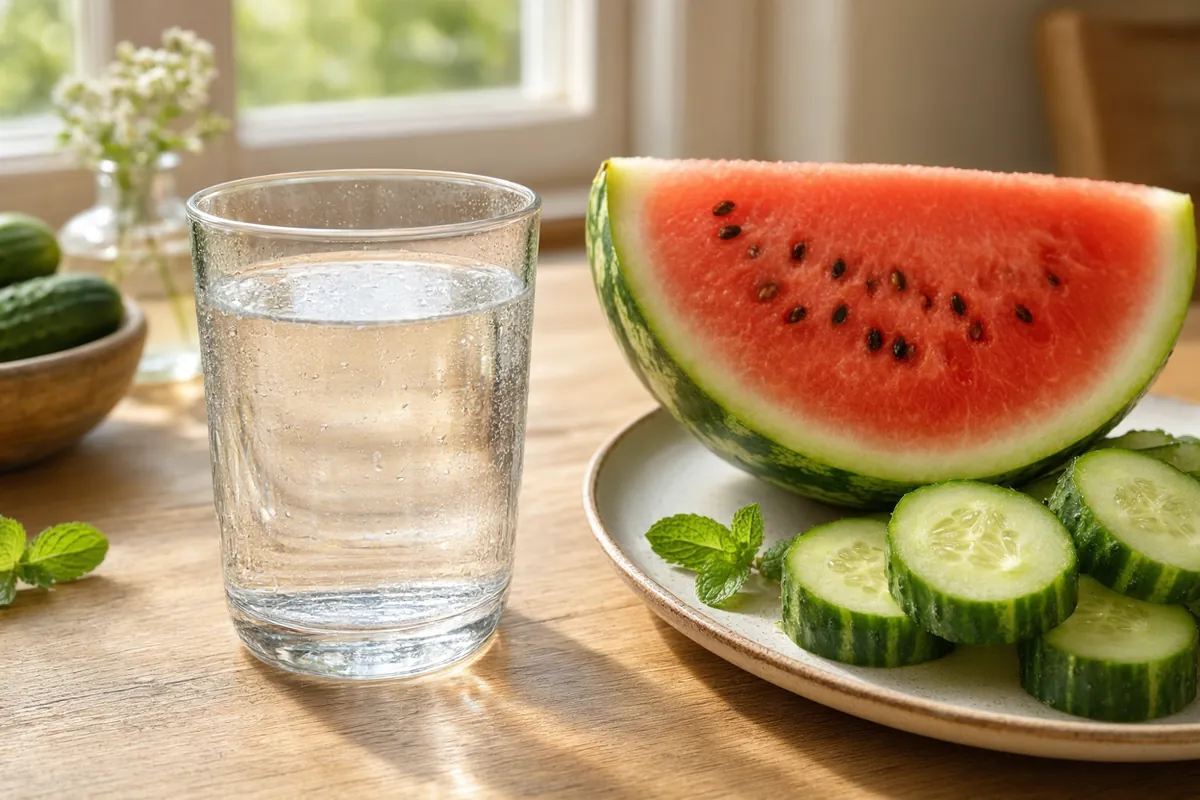
Cucumbers, watermelon, oranges, soups, and yogurt all contribute meaningfully to daily fluid intake, and they come with the added bonus of vitamins and fiber.
Watch for Medication Interactions
If you take diuretics or other medications that affect fluid balance, ask your pharmacist or doctor whether your hydration needs differ from the general guidance, and what signs of dehydration to watch for specifically.
Recognizing the Early Signs
Because thirst becomes a less reliable warning system with age, it helps to know the other signals: darker urine than usual, dry mouth, unusual fatigue, dizziness when standing up, and headaches that don't have an obvious cause. Catching these early, rather than waiting to feel thirsty, is one of the most practical hydration habits you can build.
Hydration and Physical Activity
On days with exercise, warmer weather, or increased activity, fluid needs go up. Drinking a glass of water before and after a walk or workout, and having water available during longer sessions, helps prevent the kind of dehydration that can contribute to dizziness or fatigue, both of which raise fall risk in older adults.

If you want an easy way to see how your daily habits, including hydration and nutrition, add up over time, Kalorix can help you track it all in one place.
Frequently Asked Questions
Why is staying hydrated harder after 50?
The body's thirst signal becomes less sensitive with age, kidneys become somewhat less efficient at conserving water, and common medications like diuretics increase fluid loss, all of which make it easier to become mildly dehydrated without noticing.
How much water should someone over 50 drink daily?
A common general guideline is 6 to 8 cups a day, though the right amount depends on your body size, activity level, and any medical conditions. Ask your doctor for personalized guidance if you're unsure.
What are early signs of dehydration in older adults?
Dry mouth, darker urine, unusual fatigue, headaches, dizziness when standing, and constipation can all be early signs. Since thirst alone isn't a reliable early warning after 50, it helps to watch for these other cues.
Do coffee and tea count toward daily fluid intake?
Yes, in moderate amounts they contribute to hydration, though it's still worth including plain water as your main source, since excessive caffeine can have a mild diuretic effect for some people.
Can dehydration increase fall risk in seniors?
Yes. Dehydration can cause dizziness and lightheadedness, particularly when standing up quickly, which is one of several factors that can raise fall risk in older adults.
In Summary
Hydration becomes a bit more of a deliberate habit after 50, since thirst alone isn't as reliable a guide as it once was. Simple routines, a morning glass of water, visible water bottles, water-rich foods, and awareness of medication effects, go a long way toward keeping you properly hydrated day to day.
Medical Disclaimer: This content is for informational purposes only and is not intended as medical advice. Always consult a qualified healthcare provider before making significant changes to your fluid intake, especially if you manage a heart, kidney, or other chronic condition. See our full medical disclaimer for details.