The fear of falling is one of the quietest worries that comes with age. It does not announce itself, but it changes how you move — a slower step on stairs, a tighter grip on the railing, a hesitation before standing up from a low chair. If that sounds familiar, you are far from alone, and there is a gentle, well-researched form of exercise that can help you build back your confidence: tai chi.
Tai chi is a low-impact exercise built from slow, flowing movements that ask your body to shift weight, rotate gently, and hold steady positions. For seniors and older adults, this combination trains the exact skills that keep you upright: balance, leg strength, and body awareness. This gentle exercise can be adapted to almost any fitness level, including those who prefer chair-based tai chi.
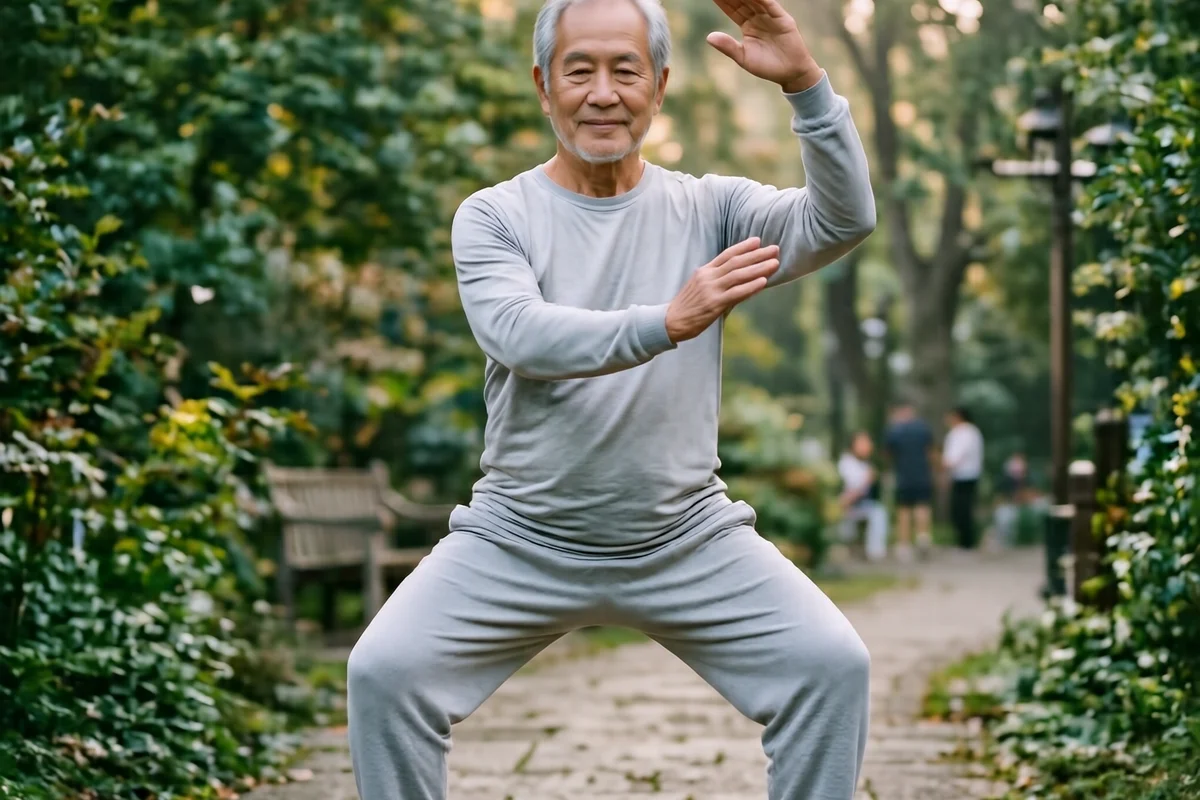
What Is Tai Chi and Why It Works for Balance After 60
Tai chi is an ancient practice that began centuries ago as a martial art, but the form of tai chi practiced today for health purposes looks nothing like combat training. It is a series of slow, continuous movements — sometimes referred to by its traditional name, Tai Ji Quan — performed while breathing deeply and keeping attention on posture and weight distribution. Each movement flows into the next without pause, which is part of what makes practicing tai chi so effective for balance training.
Here is why it works: most falls happen because the body cannot recover quickly enough after a small stumble — a curb, an uneven rug, a moment of distraction. Tai chi practice repeatedly asks you to shift your weight from one side to the other while staying controlled and centered. Over time, this builds postural control — your body's automatic ability to make tiny adjustments that keep you balanced — along with the muscle memory and reaction speed your body needs to catch itself before a stumble becomes a fall.
This kind of tai chi exercise also strengthens the muscles around your ankles, knees, and hips — the joints that do the actual work to maintain balance. Combined with the deep breathing and mental focus built into every session, tai chi trains balance ability from multiple directions at once: physical, neurological, and postural, gradually building the muscle strength your legs rely on every day.
Does Tai Chi Really Help Prevent Falls? What the Research Shows
This is not just a comforting claim — it is one of the most studied advantages of practicing tai chi. Multiple clinical reviews, including a large meta-analysis of randomized controlled trials, have looked specifically at balance in older adults and found consistent improvements in stability, walking ability, and confidence after weeks of regular practice. Several studies involving community-dwelling older adults have also reported a meaningfully lower risk of falls among participants who practiced tai chi compared to those who did not, supporting real fall prevention in daily life and better overall physical function.
Researchers point to a few reasons the practice can improve balance and prevent falls so effectively. It sharpens the body's automatic balancing reflexes, and it also appears to reduce fear of falling itself, which matters more than it might seem: when people are less afraid of losing their balance, they tend to move more naturally and confidently, which paradoxically makes them less likely to fall. One randomized controlled trial focused on fear of falling in older adults found that a consistent tai chi group showed significant benefits in both balance and confidence compared to a non-practicing control group.
The takeaway from the research is encouraging and consistent: for adults over 60, tai chi improves balance, reduces the risk of falls, and builds greater confidence in daily movement — benefits that hold up even among the elderly and among older patients managing long-term health conditions.
What Are the Overall Benefits of Tai Chi for Seniors Over 60?
Balance sits at the center of tai chi's appeal, but the practice offers a fuller picture of support for healthy aging:
- Improved balance and stability — the core benefit, built through slow weight shifts and single-leg holds.
- Stronger legs and better joint flexibility — the low, controlled stances gently tone the thighs, hips, and calves without straining the joints, supporting joint stability and better mobility over time.
- Better posture — tai chi emphasizes an upright, aligned spine, which can ease the forward-leaning posture common with age.
- Reduced stress and improved relaxation — the slow pace and focused breathing have a calming effect similar to meditation, and this calm breathing carries into daily life long after each session ends.
- Support for cognition — learning and remembering movement sequences engages memory and coordination together, and some research links regular practice to a lower rate of cognitive decline and reduced risk factors associated with dementia.
- A gentle option for chronic conditions — because tai chi is a form of gentle strength training, it is often recommended as part of exercise recommendations for people managing joint pain or other ongoing health conditions.
Taken together, this flexibility and strength combination explains why so many health organizations list tai chi among the best exercise choices for older adults who want a well-rounded, low-risk way to stay active.
5 Simple Tai Chi Exercises for Seniors to Improve Balance
You do not need a class or special equipment to begin practicing tai chi. These five beginner tai chi movements are commonly used in senior-focused tai chi routines and can be practiced in a small, clear space near a wall or sturdy chair for support if needed.
1. Weight Shifting
Stand with feet hip-width apart. Slowly move your weight onto your right leg, holding for a few seconds, then shift to your left. Keep your movements slow and controlled, breathing steadily throughout. This basic tai chi movement is often the first one taught because it directly builds balance.
2. Holding Up the Sky
Stand tall with feet shoulder-width apart. Slowly raise both arms overhead as if pressing against the sky, then lower them back down. This movement encourages full-body alignment and light stretching through the torso and arms, and it is one of the gentle exercises most instructors teach on day one.
3. Drawing the Bow
Shift your weight to one side while extending one arm forward and pulling the other back, as if drawing a bow and arrow. This movement builds coordination between your upper body and your base of support, and it is one of the most recognizable tai chi exercises for seniors in beginner routines.
4. Single-Leg Stance
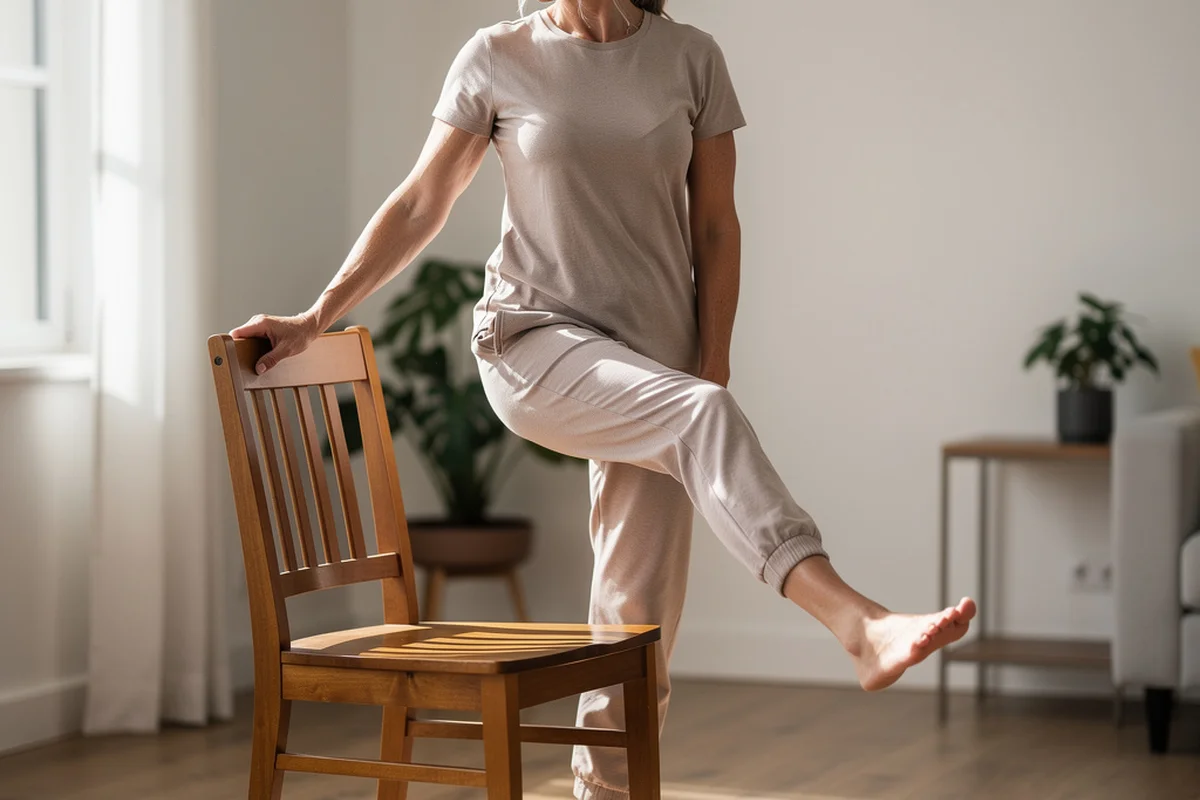
While holding onto a chair or wall for support, slowly lift one foot a few inches off the ground and hold for several seconds before switching sides. Standing on one leg like this directly trains the balance reflexes tai chi is known for.
5. Cloud Hands
Standing with knees softly bent, slowly sweep your arms in wide, circular motions from side to side while shifting your weight along with them. This flowing movement builds coordination and a sense of centered, better balance.
Practice each movement slowly, five to ten times, focusing on control rather than speed. It is normal to feel a little wobbly at first — that sensation fades with consistent practice, and practice improves balance measurably within just a few weeks for most older individuals.
Chair-Based Tai Chi: An Option for Limited Mobility
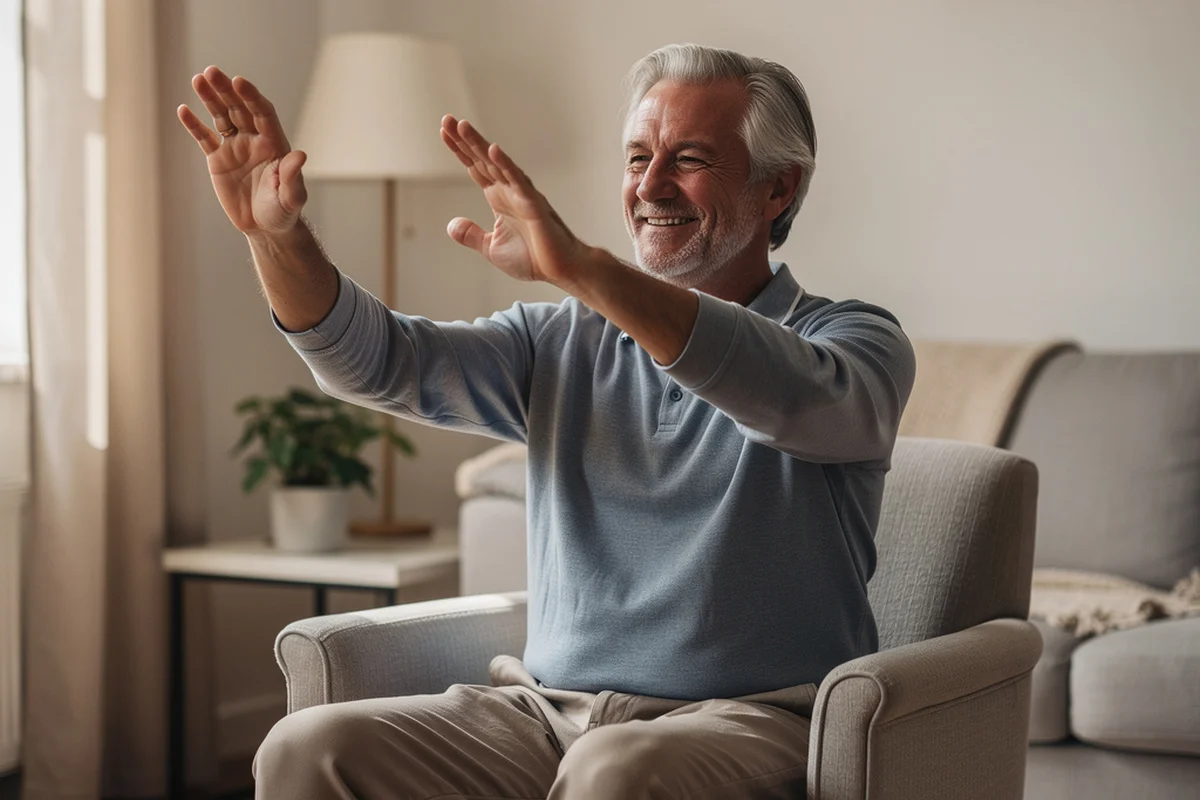
Standing balance work is not the only path. Chair-based tai chi adapts the same slow, flowing principles — weight shifts, arm sweeps, steady breathing — to a seated position, making it accessible for those recovering from surgery, managing joint pain, or simply wanting extra stability while building strength and flexibility.
In a seated practice, movements like Cloud Hands and Holding Up the Sky translate naturally: the arms and upper body do the flowing work while the chair provides a stable base on any non-slip surface. Over time, many people use chair-based practice as a stepping stone toward standing tai chi, though it also stands on its own as a complete, gentle routine for exercises for older adults with more limited mobility.
How Often Should Seniors Practice Tai Chi for Results?
Consistency matters more than intensity. Most research on this exercise and balance among older adults used sessions of around 20 to 45 minutes, practiced two to three times per week, with noticeable improvements typically emerging after eight to twelve weeks of steady practice.
If that feels like a lot to start, begin smaller. Even 10 minutes a day of a simple routine builds the habit and starts training your balance. What matters most is showing up regularly rather than doing a single long session occasionally — a pattern that shows up again and again among people who stick with this exercise for the long term.
Is Tai Chi Safe for Seniors with Arthritis or Other Conditions?
Tai chi is widely considered one of the gentlest forms of exercise available, which is part of why it is so often recommended for older people, including those managing arthritis. The slow, low-impact movements put minimal stress on the joints while still helping to strengthen muscles and improve flexibility.
A few practical tips make the practice safer and more comfortable:
- Wear flat, supportive shoes with good grip, or practice barefoot on a stable surface.
- Keep a chair or wall nearby during your first few sessions until you feel steady.
- Move only as far as feels comfortable — tai chi is not about deep stretching or forcing your range of motion.
- Stop and rest if you feel dizzy, and drink water before and after practice.
- If you are managing a chronic disease or recovering from injury, ask your doctor whether tai chi fits your current situation.
Does Medicare Cover Tai Chi Classes?
Coverage varies by plan. Original Medicare does not typically list tai chi as a standalone covered benefit, but many Medicare Advantage plans include access to fitness programs — such as SilverSneakers or similar senior fitness networks — that offer tai chi at no extra cost as part of the plan's wellness benefits. Because this fitness benefit differs by plan and region, it is worth calling your specific Medicare Advantage provider to ask whether tai chi or a broader fitness benefit is included in your coverage.
Getting Started: Classes, Videos, or Practicing Tai Chi at Home
There is no single right way to begin. Community centers, senior centers, and local gyms frequently offer beginner classes designed specifically for exercises for seniors, which can be a great way to learn proper form and stay motivated within a group setting. If getting to a class is not convenient, many reputable instructors offer guided video sessions for this exercise that you can follow along with at home, at your own pace.
Whichever path you choose, the most important step is simply starting. Begin with the basic tai chi movements above, go slowly, and let your balance and confidence build session by session. Tai chi is particularly well suited to this gradual approach, since every routine can be scaled up or down to match where you are today.
Tracking how your body responds as you build a new habit can help you stay consistent. If you are also working on nutrition alongside movement, Kalorix can help you log meals and keep an eye on your overall wellness routine as you build strength and balance together.
This article is for informational purposes only and is not a substitute for professional medical advice. Please consult your doctor before starting this or any new exercise program, especially if you have a chronic condition, balance disorder, or recent injury.