After age 50, muscle loss speeds up, and the hormonal shifts of menopause can affect bone strength too. Strength training is one of the most effective, well-researched ways to work against both changes, and it's never too late to start building strength. This guide covers why resistance training matters at this stage of life, the best exercises to prioritize, and how to build a simple weekly routine you can stick with.
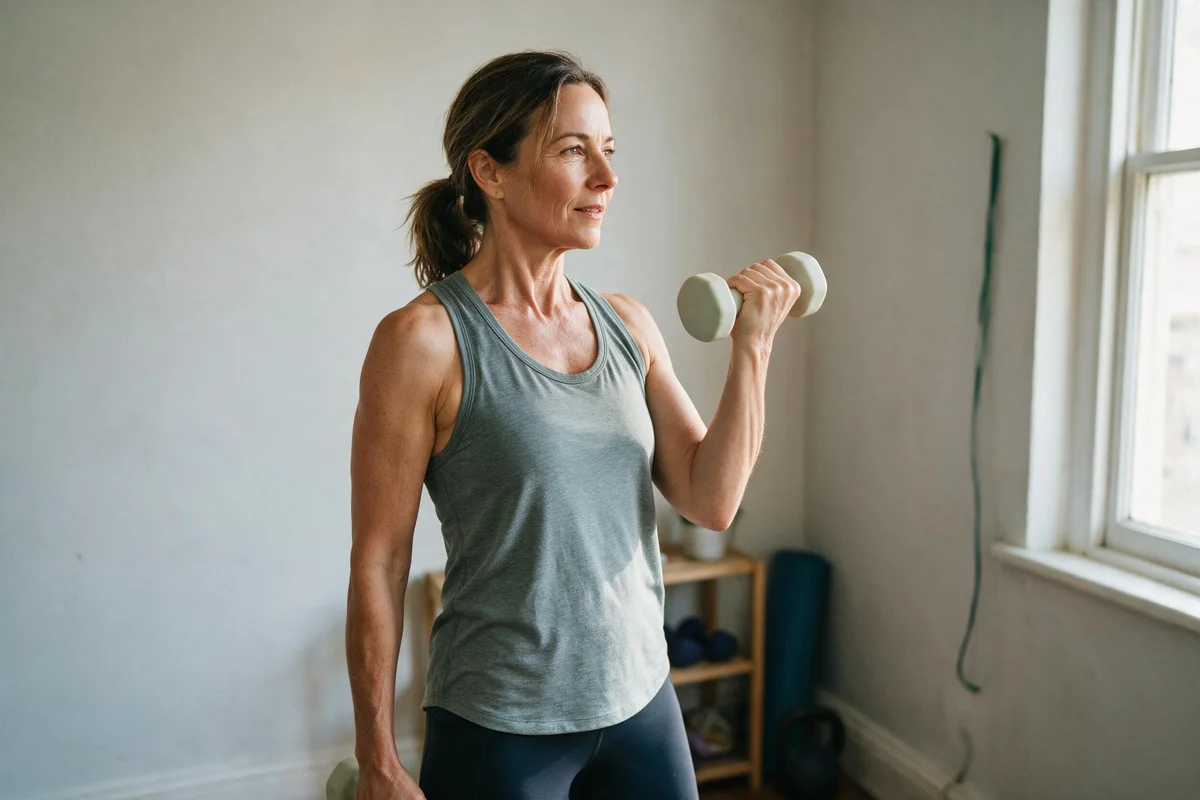
Top 6 Strength Exercises for Women Over 50
These six exercises show up again and again in training programs designed for women in midlife, because they train the major muscle groups used in everyday life: standing up from a chair, carrying groceries, reaching overhead.
| Exercise | Primary Focus | Equipment |
|---|---|---|
| Bodyweight or Goblet Squat | Legs, glutes, core | None or one dumbbell |
| Dumbbell Rows | Upper back, posture | Dumbbells or a resistance band |
| Wall or Incline Push-Ups | Chest, shoulders, arms | None or a wall/bench |
| Hip Hinge / Romanian Deadlift | Hamstrings, glutes, lower back | Dumbbells or bodyweight |
| Standing Overhead Press | Shoulders, core stability | Light dumbbells |
| Glute Bridge | Glutes, hips, lower back | None or a resistance band |
Why Resistance Training Matters After 50
Muscle mass declines with age, a process called sarcopenia, and this decline tends to speed up in midlife. At the same time, dropping estrogen levels during menopause are linked to faster bone loss, which raises the risk of weaker bones over time. This kind of training addresses both of these changes directly: research shows it can help preserve muscle and support bone density, and organizations such as the National Strength and Conditioning Association recommend it as part of a well-rounded strength training program for older adults.
Beyond muscle and bone, regular training is also linked to better balance, more stable joints, and an easier time with daily activities like climbing stairs. Some women also notice it supports mood and energy, though results vary from person to person. None of this requires lifting heavy on day one. Consistency and good form matter more than the amount of weight you lift.
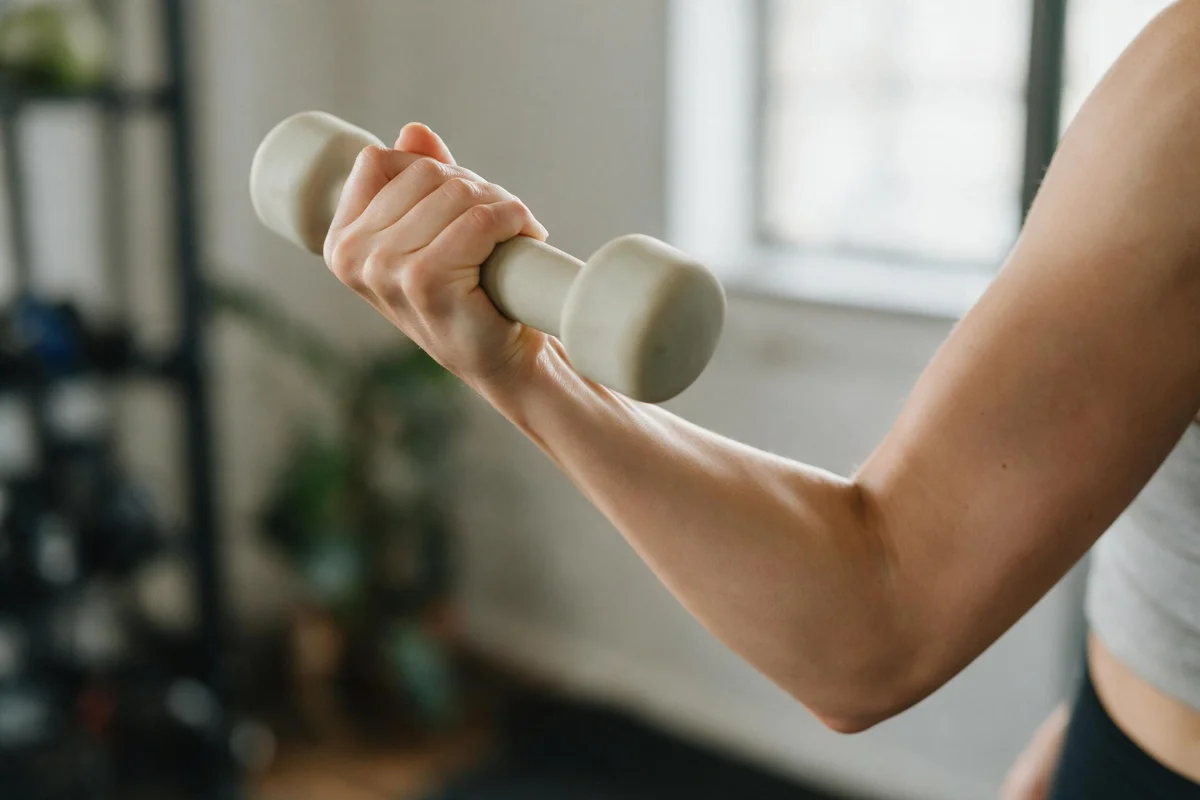
The Benefits of Building Strength
A well-rounded training program tends to support several areas of health at once, which is why a well-planned routine is usually recommended alongside cardio rather than instead of it.
Muscle and metabolism. Preserving lean muscle supports a healthy metabolism, since muscle tissue burns more energy at rest than fat tissue. This is one reason resistance work is often recommended alongside cardio, not in place of it.
Bone strength. Weight-bearing and resistance exercises place manageable stress on bones, which is part of what makes them a commonly recommended way to support skeletal strength over time.
Everyday function. Squats mirror sitting and standing. Rows mirror pulling open a heavy door. Overhead presses mirror lifting something onto a shelf. Training these movement patterns directly makes daily tasks feel easier and helps build muscle strength you can rely on.
Joint support. Strengthening the muscles around the hips, knees, and shoulders can take some load off the joints themselves, which some women find helpful if they deal with stiffness or mild joint pain.
How to Start Weight Training Safely
Starting a new training routine after 50 works best as a gradual process, not an all-or-nothing decision.
Start with an honest check-in. Consider your current activity level, any joint pain, and whether you have a chronic condition. If any of those apply, talk with a doctor or physical therapist before you begin.
Choose accessible equipment. Bodyweight movements, a resistance band, and a pair of light weights (2 to 8 kg, or 5 to 15 lb, to start) cover almost everything you need for strength training at home. There's no need for a full home gym.
Prioritize form over load. Slow, controlled reps with a full range of motion build muscle more safely than rushing through heavier weight with poor technique. If a movement causes sharp pain, stop and modify it.
Progress gradually. Once a set of 12 to 15 reps starts to feel easy with good technique, that's usually a sign it's time to add a small amount of weight or a few more reps, a principle known as progressive overload.
Support recovery with protein. Many nutrition guidelines suggest a slightly higher protein intake for people doing regular strength work, often cited in the range of 1.2 to 1.6 grams per kilogram of body weight per day, though individual needs vary and this is worth discussing with a doctor or registered dietitian.

How to Build a Weekly Training Schedule: Step by Step
A simple full body strength routine doesn't need to be complicated to be effective.
- Set your frequency. Aim for two to three strength training sessions per week, on non-consecutive days when possible, so muscles have time to recover.
- Warm up for five to ten minutes. Light walking, arm circles, and bodyweight squats prepare your joints and muscles for the exercise ahead.
- Pick five to six exercises. Cover the main muscles: legs, back, chest, shoulders, and core. The six exercises listed above are a solid starting template.
- Do two to three sets of 10 to 15 reps. Rest 30 to 60 seconds between sets, longer if a movement feels especially demanding.
- Cool down and stretch. A few minutes of stretching for the muscles just worked helps with flexibility and can ease next-day soreness.
- Track your sessions. A simple log of what you did each week, even brief, makes it easier to see progress and know when to adjust your strength training workout.
Pairing this kind of routine with your Kalorix nutrition tracking can make it easier to see whether your protein intake is keeping pace with your training, without having to guess.
Frequently Asked Questions
How many days a week should a woman over 50 do strength training?
Most women over 50 benefit from two to three sessions of strength work per week, with at least one rest day between sessions that target the same muscles. This lines up with general physical activity guidelines and gives muscles time to recover and adapt.
How heavy should a 50 year old woman lift when strength training?
There is no universal number, since it depends on experience and current strength. A useful starting point is a weight that feels challenging by the last two reps of a set of 10 to 15, while form stays controlled. Bodyweight movements are a reasonable starting point for anyone new to strength training.
Is it safe to start strength training after 50 if I've never lifted weights before?
For most people, yes, when the program starts gradually and focuses on proper form. Anyone with a chronic condition, recent surgery, or joint pain should check in with a doctor first. A guided introduction, such as a class or a personal trainer familiar with guiding older adults through exercise, can also help build confidence.
What if I have osteopenia or osteoporosis?
Weight-bearing and resistance work is often recommended as part of managing bone health, but the right intensity and movement choices can vary depending on bone density and fracture risk. This is a case where checking in with a doctor or physical therapist before starting is particularly worthwhile.
Is cardio necessary for women over 50, or is strength training enough?
The two serve different purposes and work well together. Strength training helps preserve muscle and support bone density, while cardio supports heart health and endurance. A well-rounded weekly exercise routine for women over 50 usually includes both, along with mobility and balance work.
In Summary
Strength training after 50 isn't about chasing personal records. It's a practical, well-supported way to protect the muscle and bone you already have, and to keep everyday movements feeling manageable for years to come. Start with the basics: two to three sessions a week, a handful of well-chosen exercises, and a focus on form over load. From there, the routine can only get stronger.
Medical Disclaimer: This content is for informational purposes only and is not intended as medical advice. Always consult a qualified healthcare provider before making changes to your exercise routine, especially if you have an existing health condition or take medication.