Falling is one of the biggest safety concerns for adults aged 65 and older, but the risk isn't fixed. Simple fall prevention exercises for seniors, done consistently, target the two things that naturally decline with age: balance and leg strength. Build both, and everyday movements, like standing up, walking on uneven ground, or reaching for a shelf, start to feel steadier.
Why Fall Prevention Matters After 65
According to the Centers for Disease Control and Prevention, falls are the leading cause of injury among older adults. This isn't only about broken bones. A fall can also shake confidence, limit independence, and affect daily living and overall quality of life, from cooking to visiting family.
The encouraging part: a structured routine of exercises for older adults can meaningfully help prevent falls. You don't need a gym. A chair for support and about 20 minutes a few times a week are enough to get started.
What Causes Falls in Older Adults
Several factors tend to overlap as we age:
- Reduced muscle strength in the legs and hips
- Slower reflexes and weaker balance skills
- Vision changes that make it harder to judge steps or curbs
- Certain medications that cause dizziness
- Home hazards like loose rugs, poor lighting, or clutter
Exercise helps directly with the first two, which is why it's considered one of the most effective, low-cost ways to reduce the risk of falling.
Balance Exercises for Seniors
These balance exercises are gentle enough to practice near a chair or counter, so you always have something to hold if you feel unsteady.
Weight Shifting
Stand with feet shoulder-width apart, holding the counter lightly if needed. Slowly shift your body weight onto one leg, hold for a few seconds, then shift to the other side. This helps you relearn how to balance on one leg at a time, which is exactly what walking requires.
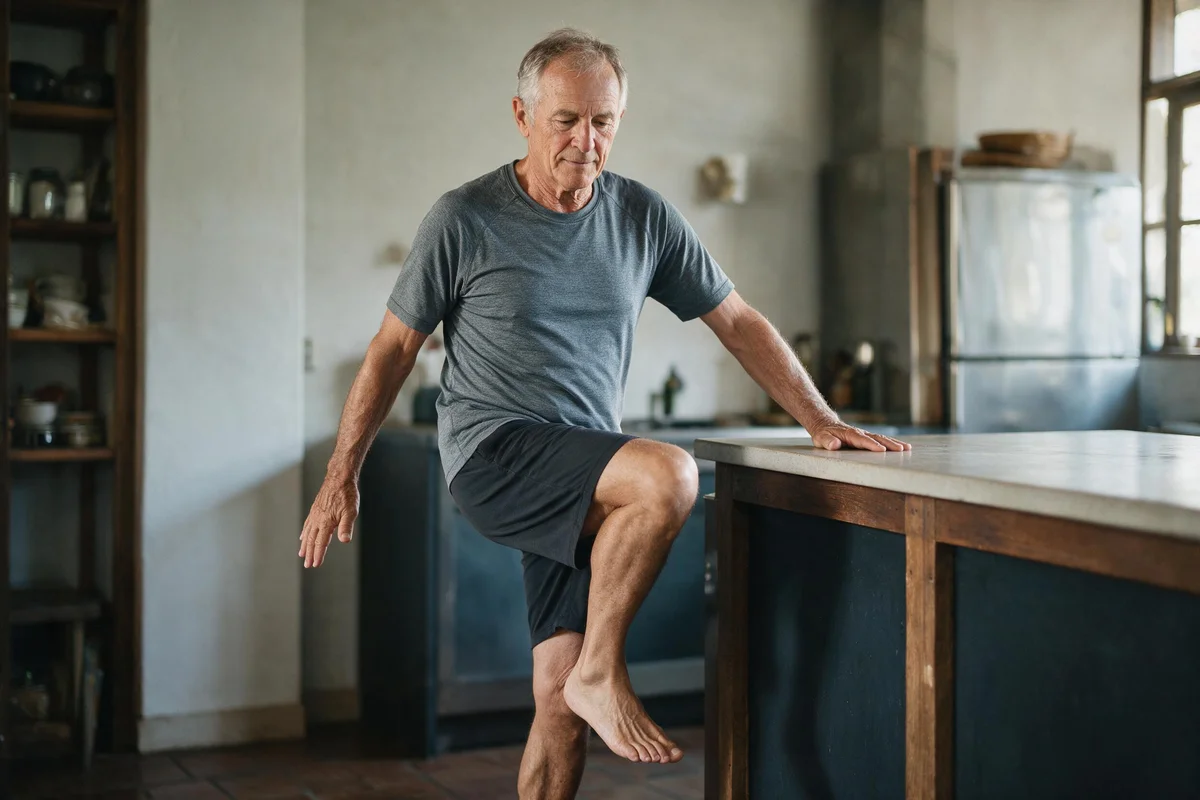
Stand on One Foot
Standing near a sturdy chair, lift a foot slightly off the floor and hold the position for 10 seconds with eyes open. As balance skills improve, some people try it with eyes closed for a few seconds, always with a hand close for support.
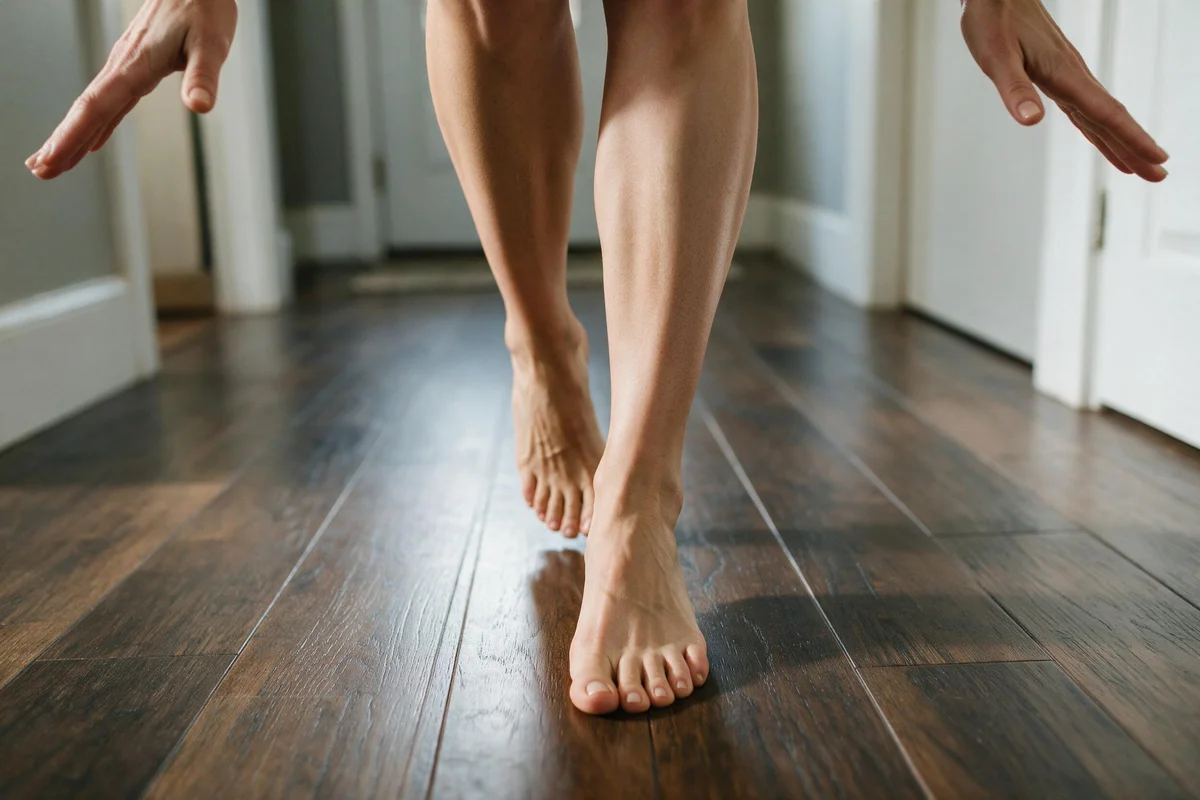
Heel-to-Toe Walk
Place a foot directly in front of the other, heel touching toe, and walk forward in a straight line for about ten steps. This is one of the best exercises for functional balance because it closely mirrors real walking.
Strength Exercises to Support Balance
Balance training and resistance exercises work best together. Stronger thigh and gluteal muscles give your body more control when you shift position quickly, like stepping off a curb or catching yourself after a stumble.
Sit-to-Stand
Sit comfortably toward the front of the seat, feet flat on the floor and feet apart at hip width. Stand up slowly without using your hands if possible, then lower back down with control. Repeat 8 to 10 times. This single movement helps strengthen your leg muscles and mirrors something you already do many times a day.
Leg Raises
Holding the back of a chair, slowly lift one leg straight back, keeping your body upright, then lower it with control. This builds overall strength in the muscles that stabilize the hips while walking.
Calf Raises
Standing with feet together and hands resting on a counter, rise up onto your toes, hold briefly, then lower slowly. This helps build strength in the lower legs, which play a key role in maintaining a stable standing position.
Other Activities That Help Seniors Stay Active
Alongside targeted exercises, being generally active supports fall prevention too. Tai chi is often recommended by physical therapists for its slow, controlled movements that build balance and flexibility over time. Regular walking, done safely and combined with regular physical activity elsewhere in the week, also supports lower-body strength and daily mobility.

How to Build a Safe Weekly Routine
You don't need to do everything at once. Building the habit gradually is safer and easier to stick with.
- Start small. Pick two or three exercises from the lists above.
- Practice near support. Keep a sturdy chair or counter within reach until you feel steady.
- Aim for consistency. Three times a week is a reasonable starting point for most people.
- Progress slowly. Once an exercise feels easy, add repetitions before trying a harder variation.
- Check in with a professional. A physical therapist can review your personal situation and recommend exercises, or a short course of physical therapy, tailored to your needs, especially if you've had a previous fall or live with a fear of falling.
Staying on top of daily habits, like activity and nutrition, is easier when you can see your progress. Many people find it helpful to track daily movement and meals with a tool like Kalorix, which can make it simpler to stay consistent week to week.
Frequently Asked Questions
What are the best exercises to prevent falls after 65?
A combination of balance work, like the single-leg stance or heel-to-toe walk, and strength work, like learning to sit to stand with control, tends to be the most effective. Consistency matters more than intensity.
How often should seniors do fall prevention exercises?
Most guidance points to two to three sessions per week, though short daily sessions of 10 to 15 minutes can also help build the habit.
Can these exercises really prevent a fall?
Research suggests that regular strength and balance work can meaningfully reduce the risk of falling in elderly adults, though results vary by individual and how consistently the routine is followed.
Is walking alone enough for balance and strength?
Walking supports overall fitness and lower-body strength, but it works best for fall prevention when paired with dedicated balance exercises, since walking alone doesn't fully challenge single-leg stability.
When should a senior see a physical therapist about fall risk?
If you've had a recent fall, feel unsteady when standing or walking, or aren't sure which exercises are safe for your situation, a physical therapist can build a personalized balance program.
In Summary
This kind of routine doesn't require special equipment or a lot of time. A few balance moves, a few strength moves, and a chair nearby are enough to start building a steadier, more confident routine. Progress at your own pace, stay consistent, and check in with a healthcare provider if you have concerns about your personal situation.
Medical Disclaimer: This content is for informational purposes only and is not intended as medical advice. Always consult a qualified healthcare provider before starting a new exercise program, especially if you have an existing health condition or take medication. See our full medical disclaimer for details.