Seated chair exercises for seniors are a simple, effective way to support your health — no gym required. All you need is a stable chair and a few minutes a day to build muscle, protect your joints, and move with more confidence. It's a genuinely effective, accessible workout option for older adults managing reduced mobility or balance concerns, and for anyone easing back into movement after time off. These exercises work for nearly any fitness level, since you can stay seated the entire time or add standing progressions once you're ready. Below you'll find 11 moves, the benefits behind them, and a full routine to help you get started safely today.

Benefits of Chair Exercises
Chair exercises are a great way to build strength and flexibility without the fall risk of standing workouts. Because the seat offers constant support, seniors can safely work toward real gains: improved muscle strength, better bone strength, and a stronger, more stable core.
Regular seated exercise can also help improve balance, which matters enormously for long-term independence and fall prevention. Simple balance exercises done from a seated position support the coordination needed to get up from a chair, climb stairs, or carry groceries without hesitation. Chair exercises can help seniors stay active even when joint conditions, heart disease, or recovery from surgery limits standing activity — and getting your heart rate up gently, through moves like a seated march, can get your heart pumping in a joint-friendly way.
In short: these moves build strength, help you maintain strength you already have, and help you stay independent as you get older.
Who Can Benefit From Chair Exercises?
This kind of workout suits a wide range of people: those managing joint pain or arthritis, people recovering from a fall or surgery, and caregivers looking for a shared, low-impact routine to do with a loved one. Because the exercises can be scaled to almost any ability level, they're also popular in rehabilitation and physical therapy settings.
If you have a serious heart condition, a recent fracture, or severe osteoporosis, consult your doctor first. For most people managing reduced mobility otherwise, chair-based exercises are one of the safest ways to start — or restart — a strength training habit.
Getting Started Safely
Before you begin, set yourself up for success:
- Choose a sturdy chair without wheels — a chair without armrests in the way is often easiest. Place it on a flat, non-slip surface.
- Find your seated position: sit in a chair with your feet flat on the floor, back straight, hip-width apart (some moves call for feet shoulder-width apart instead).
- Warm up for two or three minutes with gentle marching, ankle circles, or arm circles to loosen up before moving into your starting position for each exercise.
- Know your limits: work within a comfortable, pain-free range, and stop immediately if you feel sharp discomfort, dizziness, or chest tightness.
Over time, these small setup habits make a big difference in keeping every session safe and effective — and they take less time than actually doing the workout.
Your 11 Chair Exercises, Step by Step
Here's a list of chair exercises that covers the lower body, upper body, and core — full body chair exercises in 11 steps total, ordered from a gentle warm-up through strength work and gentle stretching. For every move below, start by sitting toward the front of the chair unless a specific step says otherwise.
- Chair Marches — Sit tall at the front of your chair and lift one knee at a time toward your chest in a steady rhythm, as if marching in place. This is a simple way to get your heart rate up before moving into strength work.
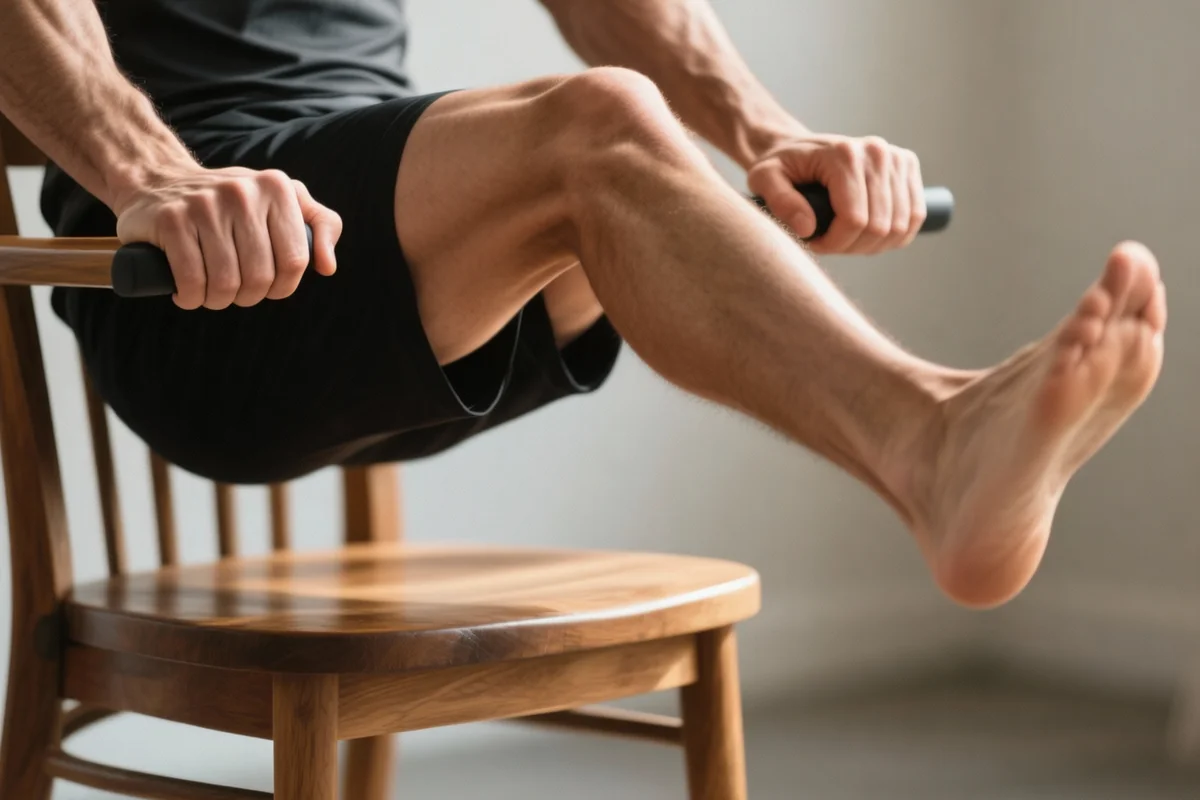
- Single-Leg Knee Extension — With feet flat on the floor, straighten one leg until it's parallel to the floor, hold briefly, then lower with control. Great for building lower body strength and knee stability.
- Seated Calf Raises — Keep your feet flat on the floor and lift both heels, then lower slowly. This move improves circulation and ankle strength — both important for balance.
- Standing Heel Raises — For a standing chair exercise progression, hold the back of the chair and hold your balance as you rise onto your toes, then lower slowly. This bridges lower-impact moves and standing progressions as your confidence grows.
- Dumbbell Bicep Curl — Holding a light dumbbell in each hand, bend your elbows to bring your hands toward your shoulders, keeping your elbows close to your body, then lower slowly. This seated bicep curl is a reliable way to add strength in the arms.
- Dumbbell Overhead Arm Raise — Start with each elbow bent at shoulder height, hands slightly bent inward, and press straight up overhead before lowering back to the starting position.
- Dumbbell Rows — Lean slightly forward from the hips, elbows back, and pull the weights toward your ribs, squeezing your shoulder blades together at the top. This upper body move also helps counter poor posture.
- Shoulder Blade Squeeze — With arms bent and elbows drawn back at your sides, squeeze your shoulder blades and hold for a few seconds before releasing — no weights required.
- Seated Side Bend — Sit up straight, reach one arm overhead, and lean gently to the opposite side. This stretch works the torso muscles that support your spine.
- Seated Forward Bend — From the chair, hinge gently forward from the hips, reaching straight in front of you toward your feet, keeping your back long rather than rounded. Go only as far as feels comfortable.
- Seated Torso Twist — Cross your arms over your chest and rotate your torso side to side, keeping your hips facing forward, for a gentle move that builds core strength and mobility to close out the routine.
Once the bodyweight versions feel easy, you're ready to lift weights — a set of 1–2 lb dumbbells is plenty to start. As confidence grows, work toward a full sit-to-stand — rising from the chair without using your hands — and try a chair squat, lowering partway down before standing back up, for an extra challenge. These exercises improve balance and coordination as much as raw strength, so progress slowly and focus on control over speed.
Chair Exercises to Improve Flexibility
Alongside strength, flexibility exercises keep joints comfortable and reduce stiffness. Two of the gentle stretches above improve range of motion in the spine and hips. Chair yoga is another accessible option that blends breathing, gentle stretching, and seated poses — it pairs naturally with the strength moves above for a well-rounded workout.
Sample Chair Exercise Routine
To build these moves into your routine, try this beginner-friendly sequence:
- 2 minutes of exercise 1 as a warm-up
- 8–10 reps each of exercises 2 and 3
- 8–10 reps each of exercises 5, 6, and 7
- 5–8 reps of exercise 8
- 5 reps each side of exercises 9 and 11
- Finish with exercise 10 to cool down
This sequence takes about 15–20 minutes from start to finish. As strength improves, bring exercise 4 or other standing exercises into your routine to gradually increase the challenge — these exercises allow you to progress at your own pace, from chair to standing.
How Often Should Seniors Train?
Most workouts for seniors, including seated workouts like this one, work best done two to three times a week, with a rest day between strength-focused sessions. This is a realistic way for seniors to stay consistent without overdoing it — the goal is steady progress, not intensity. Fifteen to twenty minutes, a few times weekly, is plenty to start seeing benefits in strength, flexibility, and daily confidence.
Safety Tips and Common Concerns
What if I have joint pain? Gentle, controlled chair exercises may actually help improve strength and mobility around the joint — but any sharp or worsening pain means it's time to stop and check with a physical therapist.
Can these exercises help with weight loss? Chair exercises burn fewer calories than higher-intensity workouts, but combined with a balanced diet, they're a reasonable piece of a broader weight-management plan. Tracking your meals alongside your workouts with a tool like Kalorix can help you see how the two fit together.
What is chair Pilates for seniors? It's a variation of Pilates principles — core control, controlled breathing, precise movement — adapted to a chair-assisted format, often blended with gentle stretching and mobility work described above.
Whatever your starting point, easy seated exercises today can grow into a full workout routine within a few weeks.
Frequently Asked Questions
Do chair workouts really work for seniors?
Yes. Consistent, moderate resistance work — even done entirely from a seat — helps preserve muscle strength and functional independence.
What are the best chair strength exercises for seniors?
Seated leg extensions, seated rows, and bicep curls cover the major muscle groups and are considered some of the best chair exercises for building overall strength.
What are some chair exercises to restore arm strength for seniors?
Bicep curls, overhead shoulder presses, and seated rows are the most direct way to restore strength in the arms using light dumbbells or a resistance band.
Is there a free chair exercise chart or routine for seniors?
The sample routine above is free to follow at home — print it out or save it as your go-to chair exercise chart.
How long should a chair workout be for seniors?
Fifteen to twenty minutes is a solid target for most chair-based workouts, two to three times per week.

Key Takeaways
- This routine is a safe, effective way to gain strength, flexibility, and balance without standing-related fall risk.
- They're especially valuable for those managing reduced mobility, chronic joint pain, or recovery from surgery.
- A stable setup, good posture, and attention to form matter more than intensity.
- Aim for 2–3 sessions per week, 15–20 minutes each, progressing gradually toward standing chair exercises.
- Stop and consult a healthcare provider if you experience chest pain, dizziness, or sharp discomfort in a joint.
This article is for informational purposes only and is not a substitute for professional medical advice. Always consult your healthcare provider before starting a new exercise program, especially if you have an existing health condition.